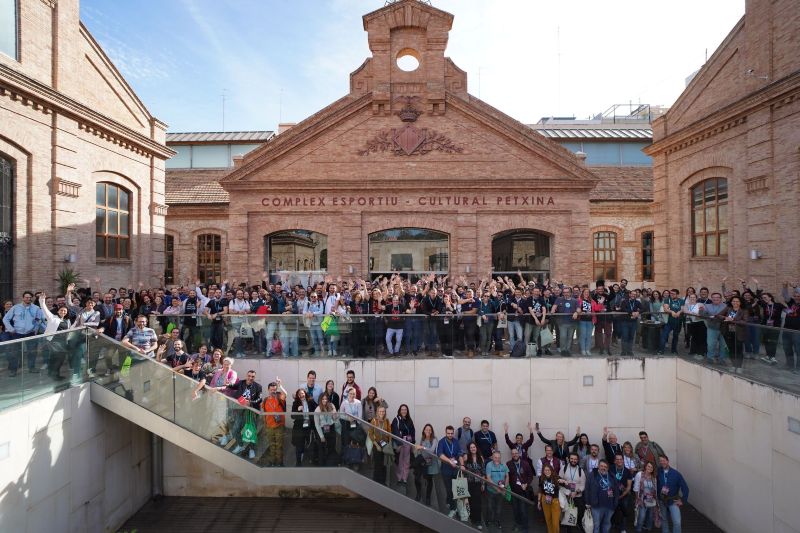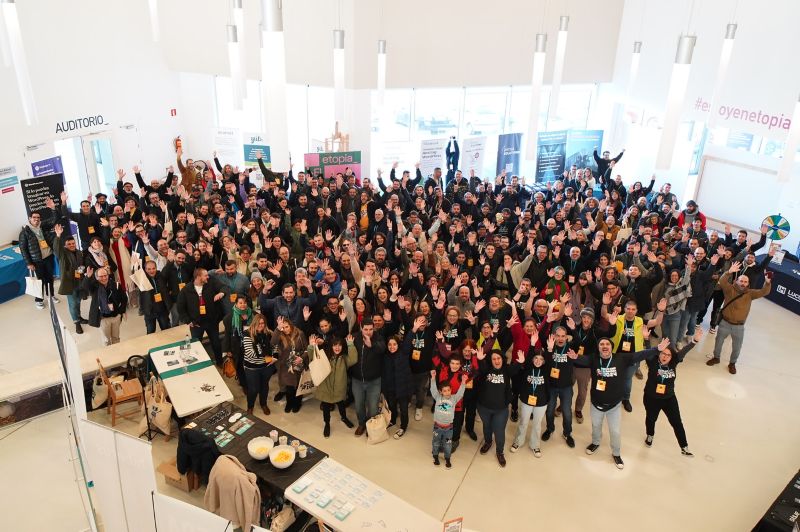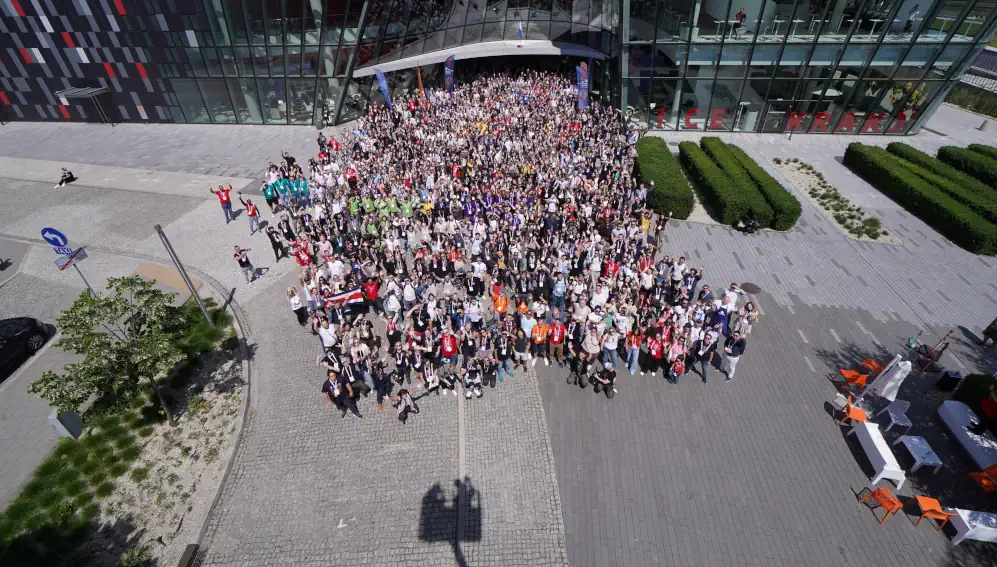
The fourteenth edition of WordCamp Europe took place in Kraków, Poland, from June 4 to 6, at the ICE Kraków Congress Centre. This year, I had the opportunity to participate as an organizer on the Communications team. Including this one, I have helped organize six WordCamps, one of them WordCamp Valencia 2026, as lead organizer. Does that sound like a lot? Well, some people have been involved in many more during the 23 years of WordPress open-source history.
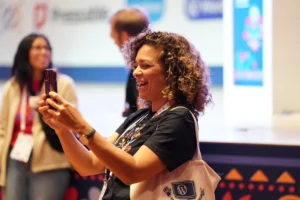
For three days, the WordPress open-source community, diverse and large like a virtual country without borders, came together to learn, collaborate, network, and reconnect with old acquaintances. This is one of the three largest events organized by the Community, alongside WordCamp US and WordCamp Asia. In this edition, 2,458 tickets were sold to attendees from 81 countries.
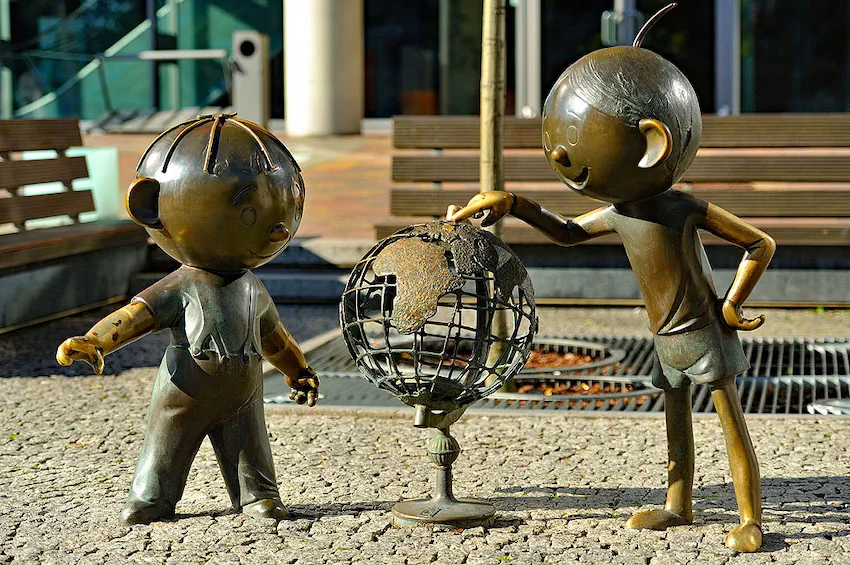
The host city, as we already know, is part of every WordCamp, and its character and particular features are reflected in the activities and graphic design of the event. Yes, Kraków was a great setting. The land of Bolek and Lolek, two children’s heroes who were very popular in Cuba. The series was created, written, and directed by Władysław Nehrebecki and designed by Nehrebecki, Alfred Ledwig, and Leszek Lorek. It tells the fun outdoor adventures, without screens (there were none at the time), of two Polish brothers. In Spanish, the series was distributed as Bolek y Lolek; in English as Benny & Lenny, Jym and Jam, and Tim & Tom. Do you know them?

A city with history, cultural life, and streets full of movement. During the days of the WordCamp, we were able to attend the Great Dragon Parade of Kraków (Wielka Parada Smoków). This is a spectacular annual event that pays tribute to the famous legend of the Wawel Dragon. According to tradition, a dragon lived in an underground cave beneath Wawel Hill, on the banks of the Vistula River. It spread terror by devouring livestock and destroying villages. The king of the region (Prince Krakus, founder of the city) promised a great reward and his daughter’s hand in marriage to whoever managed to get rid of the monster. Skuba, a humble shoemaker, was the one who succeeded in getting rid of the dragon. He stuffed a sheep with sulphur and left it in front of the cave. When the dragon swallowed the trap, the sulphur began to burn inside it. In agony, the beast ran to the Vistula and drank so much water that… it exploded!
It is held every June, over a weekend, and stands out for its two main events: a night-time light show on the river and a colourful daytime parade. Specifically, this year it took place on June 6.
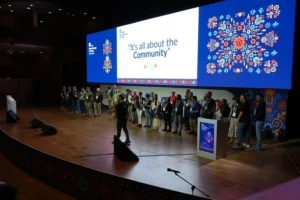
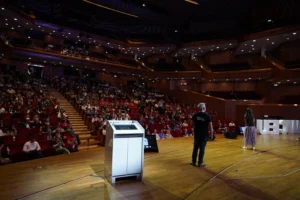
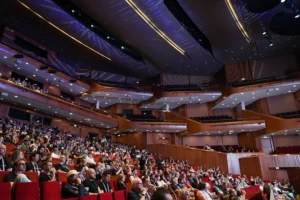
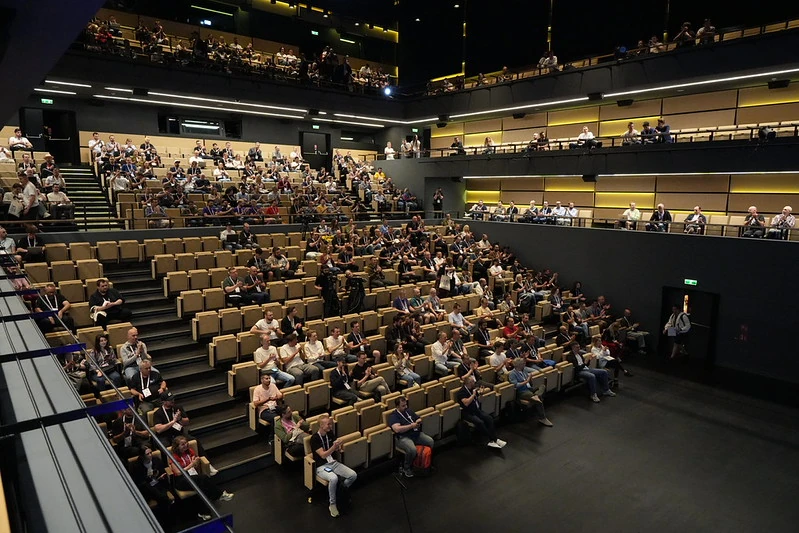
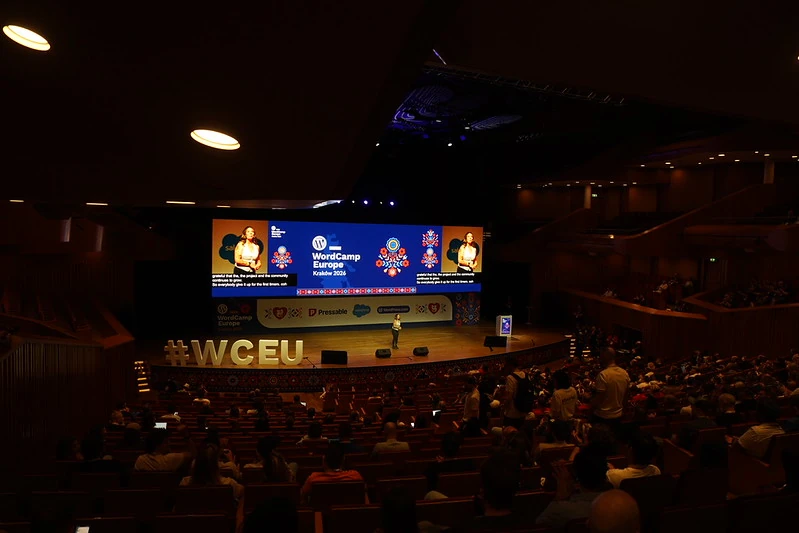
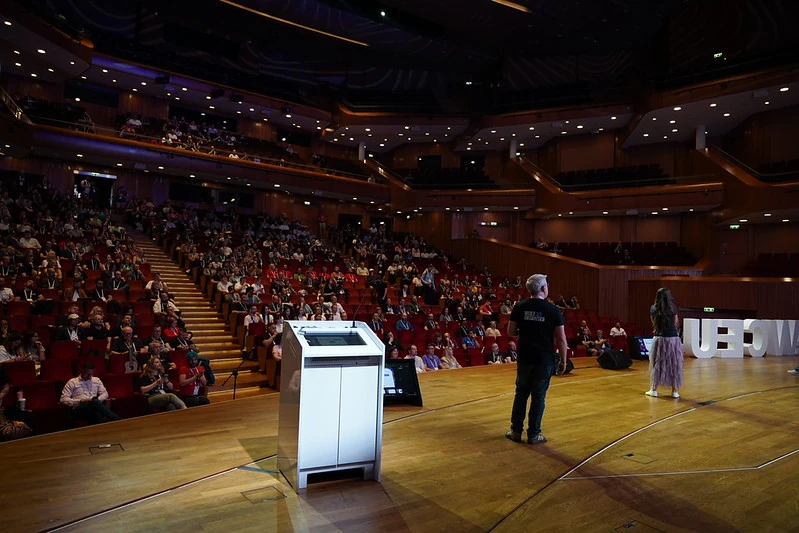
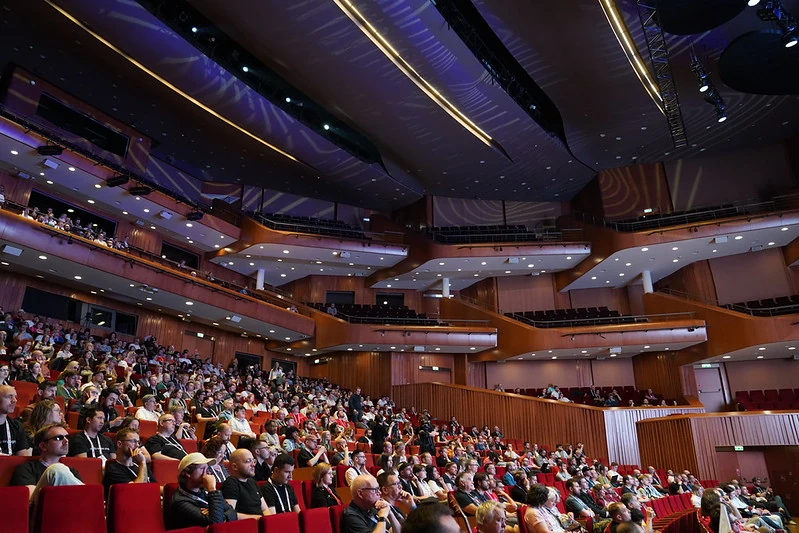
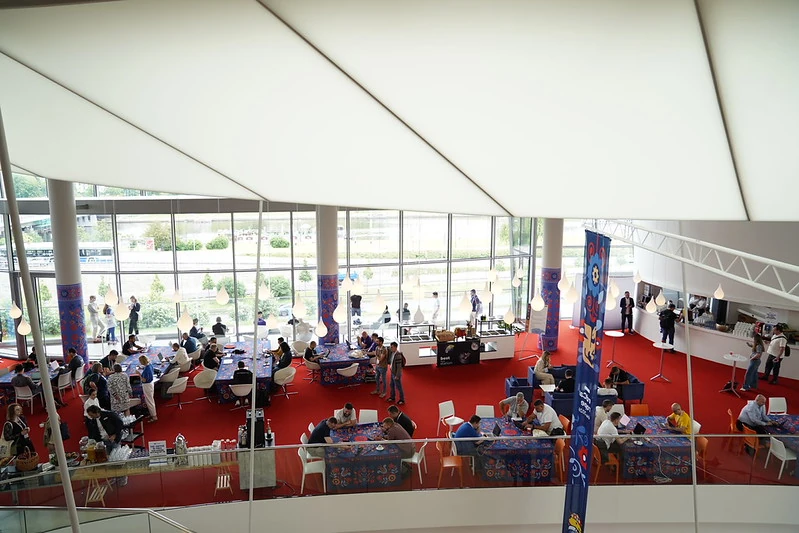
The venue was another of the spectacular protagonists of this edition. The architecture of ICE Kraków is impressive, designed by the Japanese studio Arata Isozaki & Associates in collaboration with the Polish studio Ingarden & Ewý Architects. It was inaugurated in 2014. The venue stands out for its glass façade shaped like the bow of a ship, facing the Vistula River and Wawel Castle. Spectacular elliptical staircases ran through the entire central space, creating levels where the sponsors, networking areas and food areas were distributed.
Contributor Day
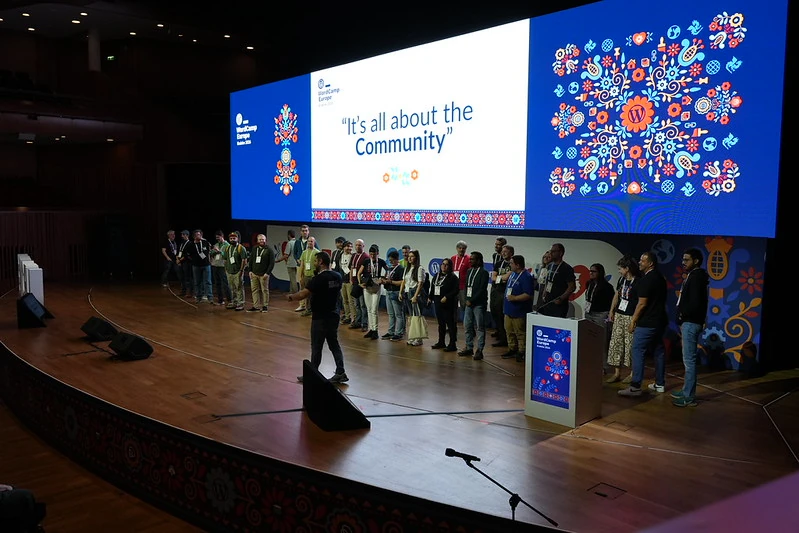
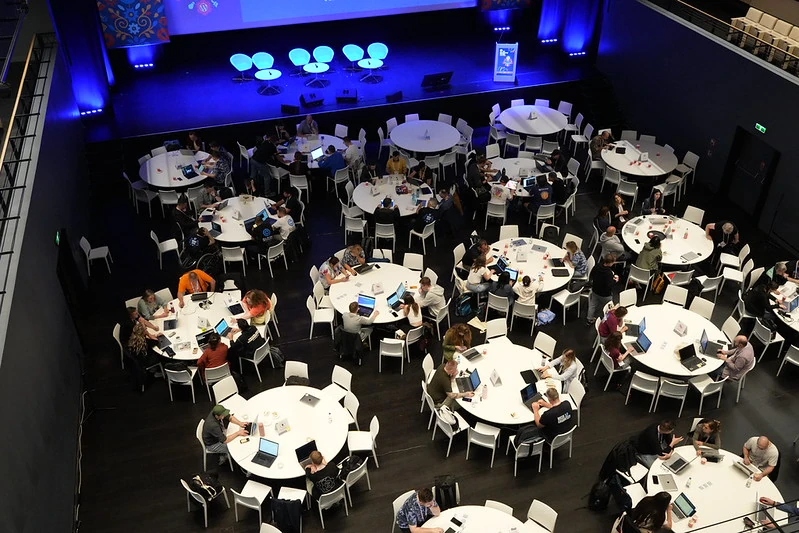
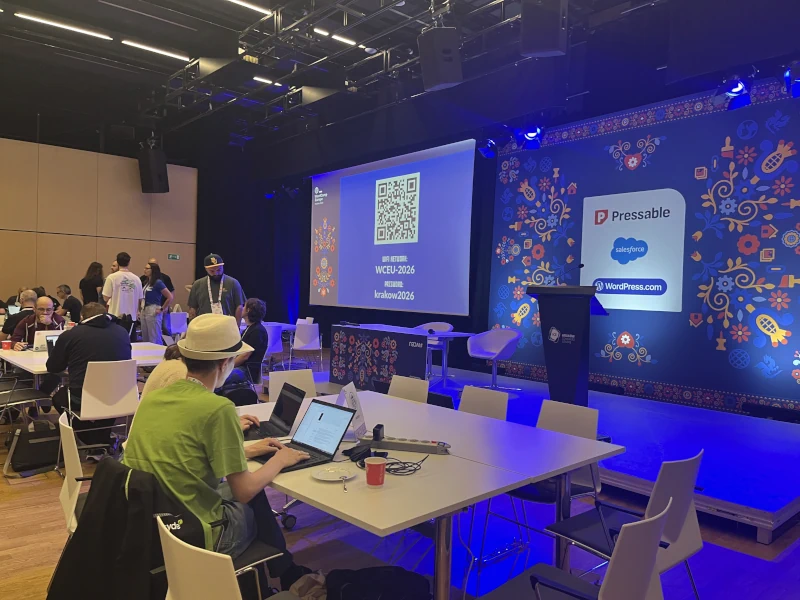
As every year, everything began with Contributor Day. For those who are not familiar with this day, it could be defined as a major collaborative working day where the people who contribute to WordPress sit together to develop the project. It is not a day of talks. It is a day for doing: translating, documenting, reviewing, testing, writing, organizing, helping, or learning how to start contributing.
This year, there were 23 teams (Make Teams) and 35 table leads. Let’s look at some of the participants. This information was provided by Fotis Routsis, team lead of the Community team at WordCamp Europe 2026.
Accessibility- Joe Dolson
Community- Juan Hernando y Francesco Di Candia
Accessibility: Joe Dolson
Core: Christoph Daum, Giorgi Mamadashvili, Dennis Snell
Core Performance: Weston Ruter, Adam Silverstein
Core AI: Greg Ziółkowski, David Levine
Documentation: Milana Cap , Estela Rueda)
Education: Maciej Pilarski
Hosting: Chris David Miles
Polyglots: Andrzej Piotrowski, Piotr Misztal
Support: Marius Jensen
Patterns: Chetan Prajapati
Plugins: Francisco Torres, David Pérez García
Meta: Konstantin Obenland , Paul Kevan
Training: Jamie Madden, Nikola Nikolic
Test: Anukasha Singh
TV: Sébastien Serre
Marketing: Ivana Ćirković
CLI: Alain Schlesser, Jan-Willem Oostendorp
Photos: Rita Robles Loaiza
Playground: Fellyph Cintra, Ashish Kumar
WordPress Coding Standards: Rodrigo Primo
Multisite: Dennis Ploetner, Bernhard Kau
One of the most important things about Contributor Day is that it is not designed only for people with experience. It is also an entry point for those who arrive for the first time and want to understand how WordPress works from the inside. And that is one of the most powerful ideas behind WordPress: you do not have to wait until you are an “expert” to start contributing. There is always a way to contribute.
Day 2 and Day 3. Talks, workshops, and conversations
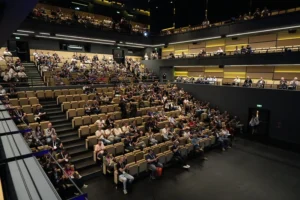
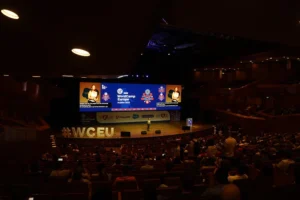
The second and third days were dedicated to talks, workshops, and working sessions. The programme included 49 talks and 8 practical workshops. The types of talks were as follows: 30-minute long talks, 10-minute Light Talks, 30-minute panels, and 75-minute workshops. The categories were as follows: Enterprise, business, AI, development, accessibility, community and people, content and writing, education, and cybersecurity.
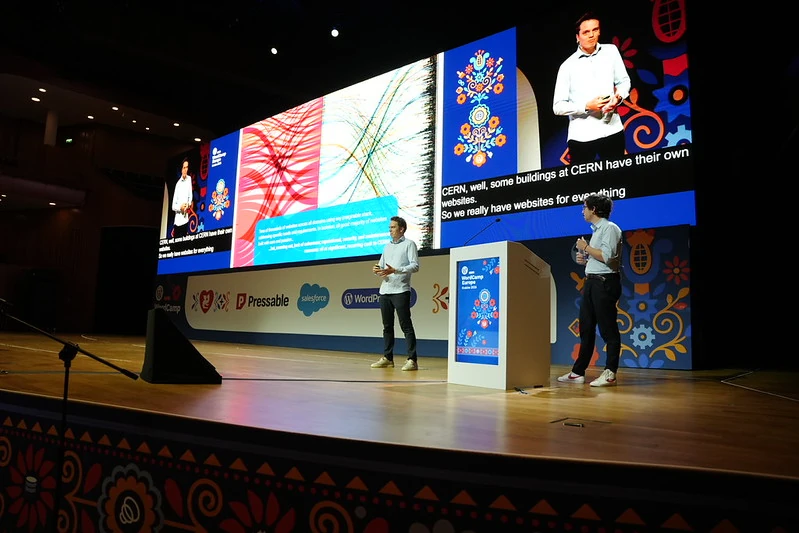
One of the major moments of these days was the opening keynote with CERN, titled: “Two worlds collide: WordPress at CERN”. It is highly symbolic that the institution where the World Wide Web was born shared how it is using WordPress to modernize its digital presence. During the talk, it was announced that home.cern, its main site, had been running on WordPress since 2025, and the process of adopting WordPress at scale in an international organization was discussed, addressing aspects such as governance, infrastructure development and the automated migration of more than 800 websites to a custom WordPress service. After the talks, some CERN members were available to answer attendees’ questions.
This talk was part of the Enterprise category. It featured Joachim Valdemar Yde: CERN’s web lead since 2021, where he leads the web team responsible for the services that support CERN’s online presence, and Francisco Barros, platform and infrastructure engineer at CERN, who manages the team responsible for the infrastructure that supports all CERN CMS websites. They were the ones in charge of this session.
There was also a discussion about the latest WordPress update, version 7.0. In this regard, one of the key sessions was the panel: “Inside WordPress 7.0”. The new features of the software, the process of releasing such an important version, human errors, and contribution workflows were addressed. Among the main new features are the use of PHP 7.4 as a minimum requirement, real-time editing and collaboration, and native connectors for AI providers using your own API key, including OpenAI, Anthropic (Claude), and Google (Gemini) by default. These changes align WordPress with current trends in the technology market. Key contributors took part in this session, including:
Juan Manuel Garrido: Developer Advocate with more than 20 years of experience in web development, specialized in JavaScript and WordPress. He works in Developer Relations at Automattic. A WordPress core contributor, he co-leads the Triage team within the group responsible for the WordPress 7.0 release and is part of the WordPress Test Team.
Adam Silverstein: WordPress core committer, where he works on fixing bugs and improving modern web capabilities. He previously worked at Google and is currently focused on WordPress core as a sponsored contributor.
Benjamin Zekavica: Founder of Kreo Pulse and UnleashWP, and a member of the WordPress Core Team.
Sarah Norris: Founder of Kreo Pulse and UnleashWP, and a member of the WordPress Core Team.
Milana Cap: WordPress Engineer at XWP, freelance WordPress engineer at Toptal, representative of the WordPress Documentation team, plugin reviewer and Documentation lead during the WordPress 5.8 to 6.2 release cycles, as well as for the end-user documentation of WordPress 7.0.
This talk was part of the AI and Development category.
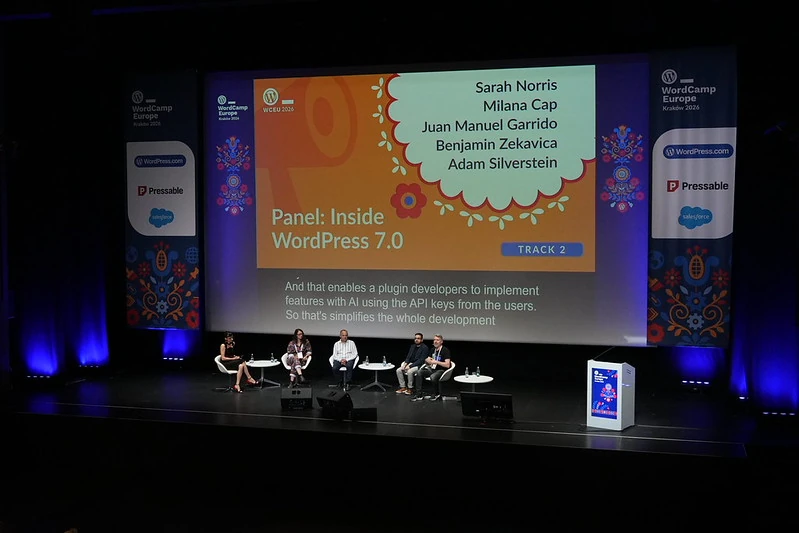
Of course, the use of AI brings many questions and reflections, such as: what kind of web do we want to build, how do we protect the openness of the ecosystem, and how do we ensure that technology remains at the service of people?
One of the talks where these topics were addressed was “Human in the loop means something”, in the AI and Business category. The way we build products has changed, and this means recognizing that change in order to understand in which areas we need to collaborate as human beings. For that reason, this session discussed the points where systems fail, referring to AI and human work. It was delivered by Tammie Lister, who is Chief Product Officer at Convesio. She has a hybrid profile that combines product, design, psychology and development.
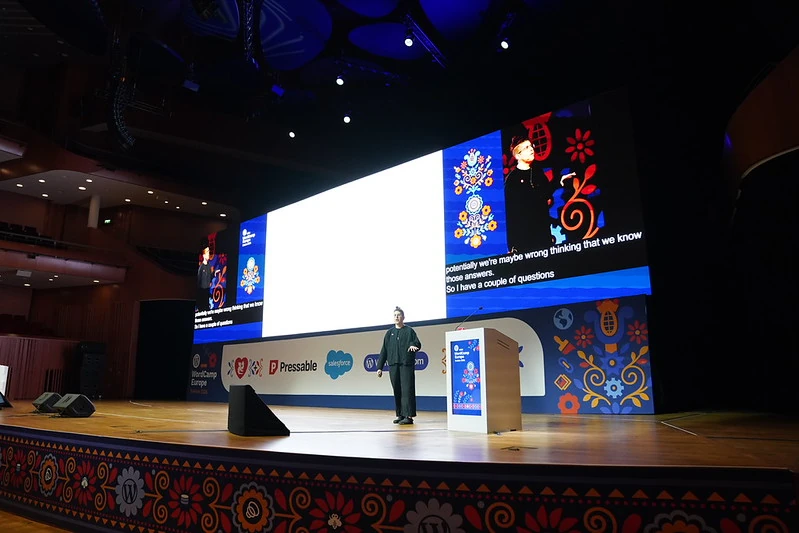
Also in the Business category, I would like to mention: “How to make toast”, with Stacy L. Carlson, Global Director of Affiliate and Influencer Marketing at Automattic. In this workshop, she talked about how to break down complex jobs into clear and viable steps, in order to teach us a repeatable method that you can use whenever you need clarity, alignment or a new way to plan your work.
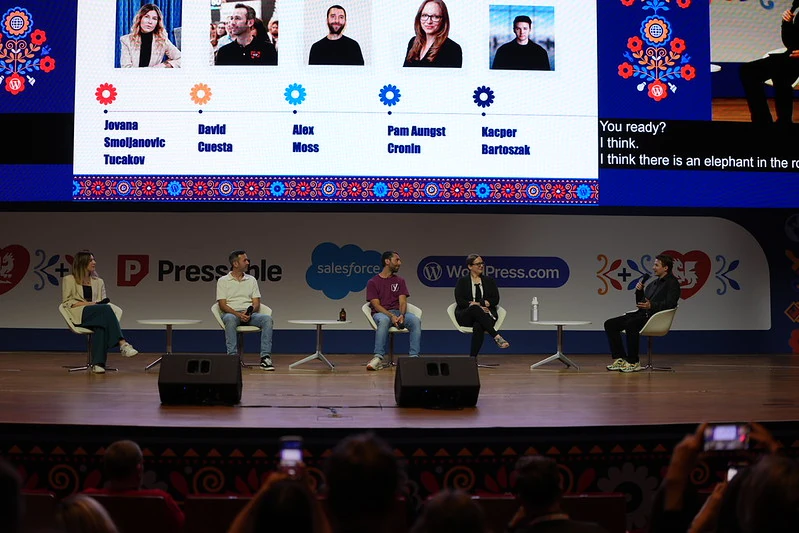
SEO also had its place at this WordCamp Europe 2026. There was a panel titled: “The future of SEO”, where the shift from SEO to GEO was addressed and what this means for those who create sites with WordPress, generate content, or run businesses that depend on organic traffic. The participants were:
Kacper Bartoszak: entrepreneur and marketing strategist, specialized in viral growth and AI positioning. Head of Marketing at the Startup Community Poznań Foundation.
Pam Aungst Cronin: a widely recognized expert in SEO, PPC, analytics, and artificial intelligence. Recognized as “Top 10 Women in SEO”. She is the owner of Pam Ann Marketing, LLC and Stealth™ Search and Analytics.
Alex Moss: expert-level SEO consultant, WordPress developer, and marketing strategist; he is Principal SEO at Yoast.
David Cuesta: leads a digital marketing agency specialized in SEO and WordPress web development.
Jovana Smoljanovic Tucakov: Content strategist and SEO lead at Melograno Ventures.
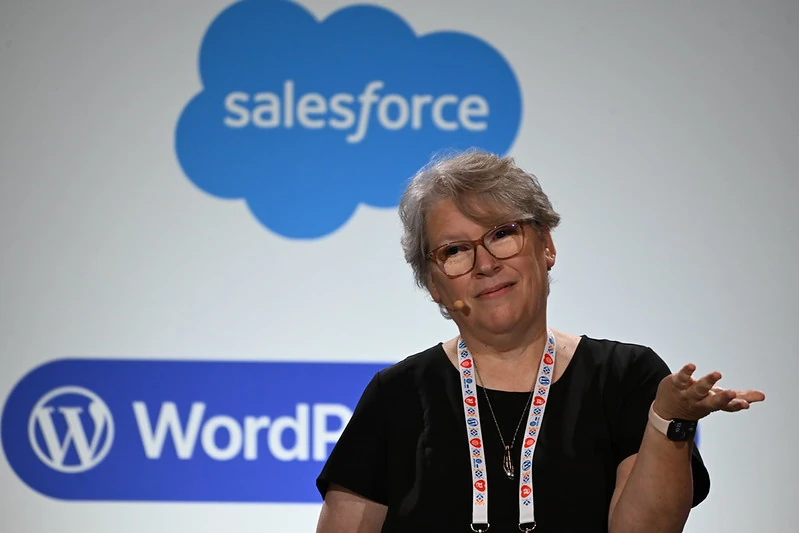
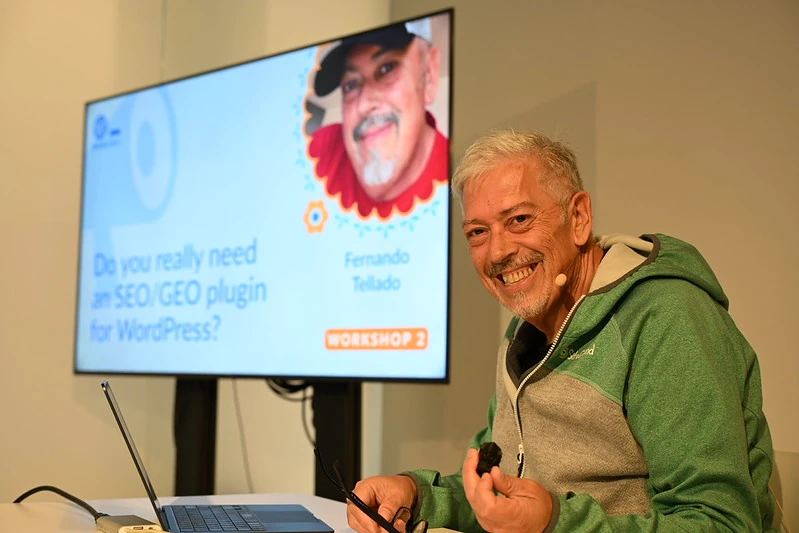
In the Content and Writing category, we had the workshop “Do you really need an SEO/GEO plugin for WordPress?” by Fernando Tellado, founder of the blog ayudawp.com, who also runs an agency specialized in security, performance, and online presence. In the workshop, he taught attendees how to make the most of WordPress’s native tools, especially in the SEO area, without installing any plugin. You can see a short interview with Fernando in the recap video that I leave for you at the end.
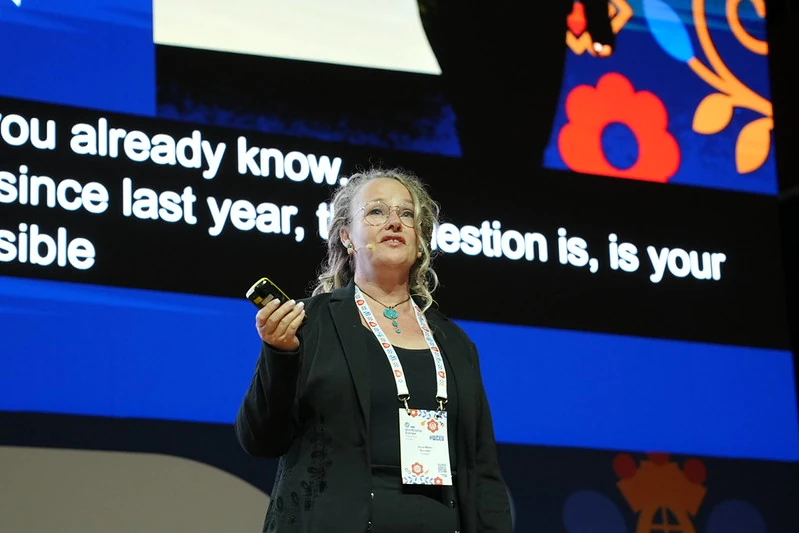
In the Accessibility category, and linked to SEO, I would like to mention: “The clarity dividend: accessibility as an SEO strategy”, with Anne-Mieke Bovelett, who is a strategic advisor and coach in digital accessibility and WordPress growth. In her talk, she focused on the change in the world of SEO and on how search engines no longer limit themselves to looking for keywords, but also measure user experience. She demonstrates this with data on how accessible WordPress sites rank better and reach further. In addition, she explored how to design for the disabled community, including the 1 in 7 people who are neurodivergent, which creates a “clarity dividend” that makes it easier for Google to rank your site and for AI agents to recommend it.
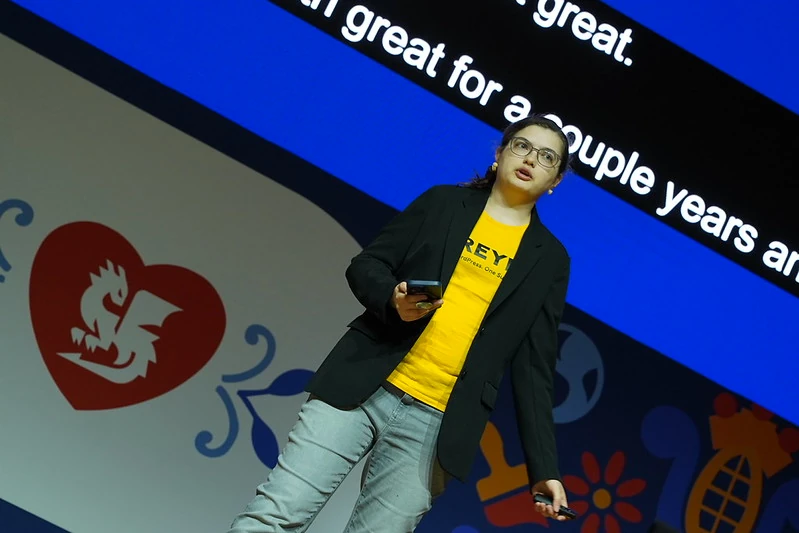
Another very interesting proposal in the same Accessibility plus Development category was: “Accessibility in themes: easier than you think”, with Jessica Lyschik, senior developer at Greyd and WordPress core contributor. She was co-lead of the default theme Twenty Twenty-Four. In this session, she shared practical lessons from real theme reviews and showed how both block themes and classic themes can achieve accessibility-ready status with a manageable effort.
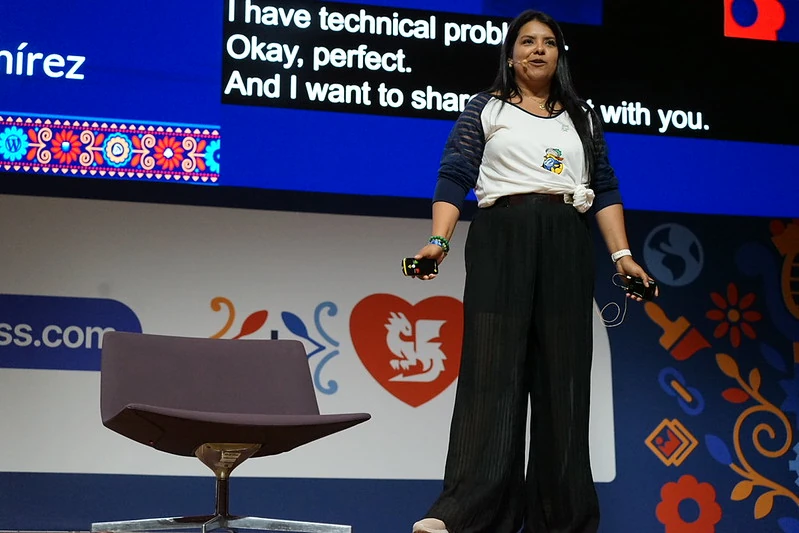
Also in the same category, Priscilla Collado’s talk: “Open source is democratic infrastructure – support it!”, explored a simple idea: the same freedom that makes WordPress powerful can also feel overwhelming for those who are just starting out. And when choice becomes pressure, learning slows down. Priscilla is a creative educator, publicist, fashion designer, and entrepreneur from Costa Rica, focused on making learning more human, accessible, and empowering. You can see a mini interview with Priscilla in the WordCamp Europe 2026 recap video.
Also in the same category, Priscilla Collado’s talk, “Why WordPress feels overwhelming for beginners”, explored a simple idea: the same freedom that makes WordPress powerful can also feel overwhelming for those who are just starting out. And when choice becomes pressure, learning slows down. Priscilla is a creative educator, publicist, fashion designer, and entrepreneur from Costa Rica, focused on making learning more human, accessible, and empowering. You can see a mini interview with Priscilla in the WordCamp Europe 2026 recap video.
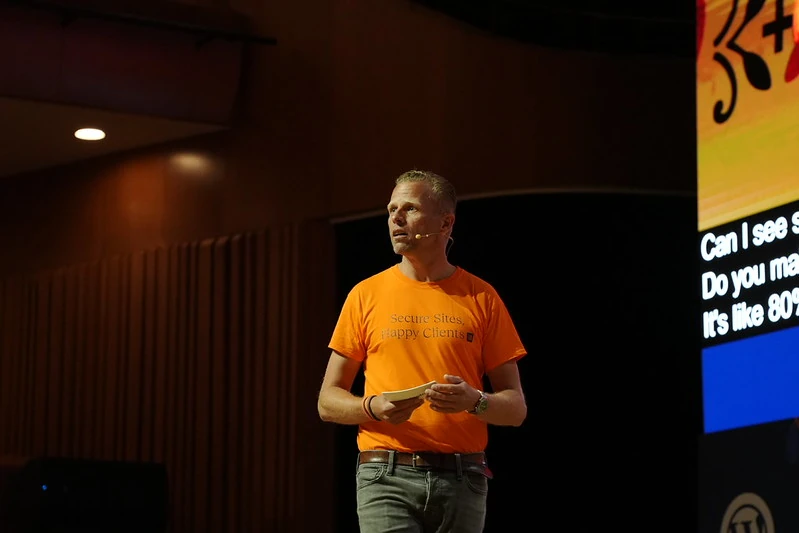
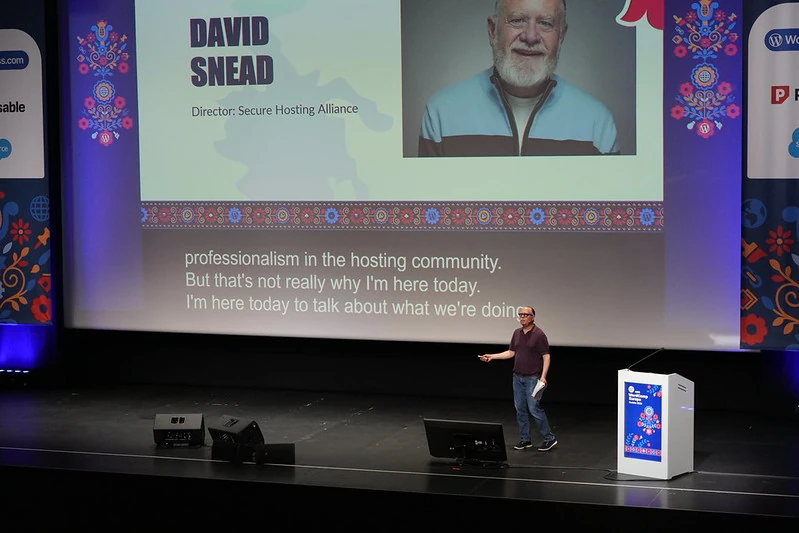
And finally, in the cybersecurity category, I would like to mention the talk “Coordinating the fight: cross-industry collaboration” with David Snead, who is director of the Secure Hosting Alliance and runs a law firm representing Internet infrastructure providers. He has advised technology companies since 1995, beginning with a practice focused on technology exports. Since 1999, his work has focused exclusively on the Internet infrastructure industry.
In this session, he explored how the Internet Infrastructure Forum (IIF) enables hosting providers, registrars, and registries to coordinate the response to abuse through real-time intelligence sharing. He aimed to show how operational collaboration helps responsible operators detect and stop attacks faster than adversaries can adapt, and why working together produces results that no provider could achieve alone.
A programme that provided technical WordPress knowledge and, in record time of two days, immediately brought attendees up to date. Beyond sharing technical knowledge, the programme aims to open conversations, connect experiences and show how WordPress continues to be a living space where development, design, content, marketing, accessibility, entrepreneurship and innovation coexist. Each talk will help you discover new tools, question ways of working, and find inspiration to continue building better projects with WordPress.
Patrocinadores y sponsor área
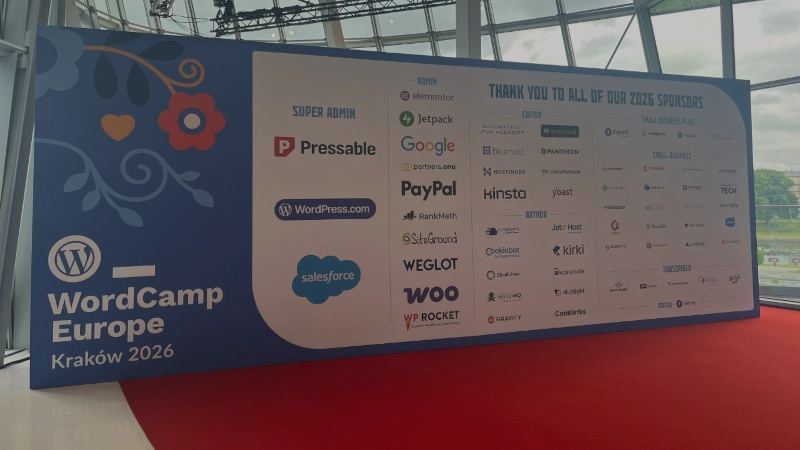
The sponsor area once again became one of the most active spaces at the event. Companies from the WordPress ecosystem presented products, services, news, activities, and conversations around tools that many people use every day. Among the Super Admin Sponsors, the presence of Salesforce, Pressable, and WordPress.com stood out.
Sponsors not only give visibility to their brands. They also make it possible for an event of this scale to offer an accessible programme, suitable spaces, food, coffee, logistics, streaming and a carefully designed experience for attendees, speakers, volunteers and organizers.
At a WordCamp, the sponsor area is a space for discovery. You can learn about new solutions, speak directly with product teams, ask questions, find professional opportunities, or simply pick up some curious swag.
Side Events
Side events are another very special part of WordCamp Europe. When the official sessions end, the community spreads out across the city in smaller meetups, parties, coffees, themed meetings, or activities organized by companies and members of the community.
Este año, tuvimos algunos eventos que se van haciendo tradicionales como:
– Picnic in the park organizado por Patricia Brun.
–Taphophile’s Delight: 2nd Annual WCEU Cemetery Walk organizada por Ohia Wins.
–Automattic Connect
–Freemius Makers Meetup
– Late Beers (WebHosting.today)
– Glow party with Yoast and Bluehost. Un side event muy esperado todos los años, incluye un espectáculo inicial.
– Elementor Day
– WP Umbrella & Patchstack’s Rooftop Party.
– Woo Community Meetup
Kraków accompanied them; the city invited people to move around, discover neighbourhoods, try local food, and let the WordCamp extend beyond the official schedule.
After Party: An incredible ending to an incredible WordCamp
And to close, the after-party arrived. After intense days of sessions, organization, volunteering, interviews, conversations, and encounters, the final party was the perfect space to breathe, dance, laugh, and say goodbye.
It was very special. It had a clear local flavour, with references to Polish culture and Kraków’s imagery. Very lively and running from 8:00 p.m. to 4:00 a.m. It included several areas and activities, among them a live band, disco, karaoke, and a space to talk calmly. In the recap video I created for this WordCamp, you can see a mini interview with Sebastian Miśniakiewicz, team lead of the Local team, in charge of managing this magnificent event.
This is also part of the experience. A closing moment when people are no longer thinking about the agenda, but about hugging, thanking, taking the last photo, or promising that they will see each other again at the next WordCamp.
More information in the video.
Final
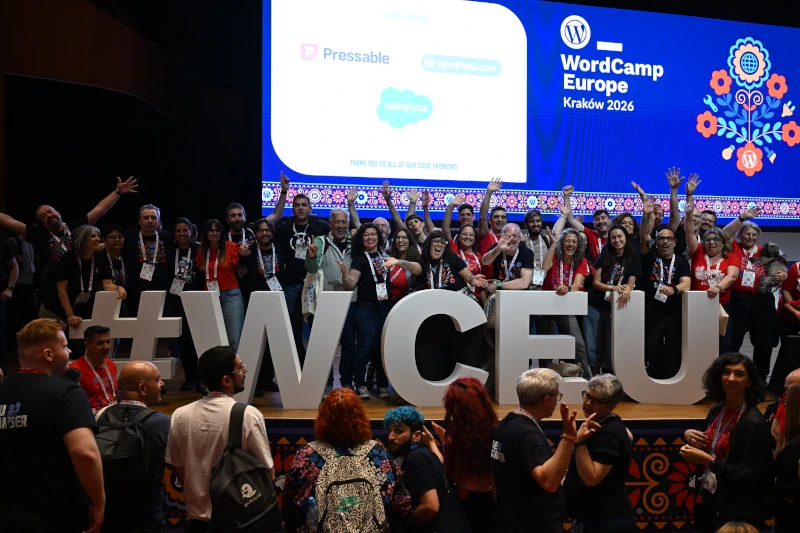
WordCamp Europe 2026 was an edition marked by the energy of Kraków, by the arrival of new people into the community, by conversations about artificial intelligence and by the reaffirmation of WordPress’s role in the future of the open web.
For three days, we learned, contributed, shared ideas, and remembered once again that WordPress is not just a tool. It is a global community sustained by those who organize, translate, design, develop, document, review, teach, sponsor, communicate, and accompany others.
Kraków left us with lessons, conversations, inspiration, and new connections. It also left us with that very WordCamp feeling of having lived something that continues long after returning home.
Have you got over your post-WordCamp hangover?
And now comes the post-WordCamp hangover, which exists precisely because, for a few days, a small temporary city is created. A city made of people who share the same way of understanding the web: open, collaborative, and built by everyone.
Hallway Networking Video
And to remember it again, because remembering is living it once more, I leave you with this video that I made during those three days. I aimed to show how we experienced those days and to simulate something we do: hallway networking. That is why I have several interviews with incredible people I met along the way, and with each of them, I interact in a different way; that is why the camera and the angle are always different, because spontaneity defines the format of hallway networking. I invite you to watch it, give it a like, and subscribe to learn more about WordPress and technology.
The end of WordCamp Europe 2026 means only one thing: the next WordCamp is already underway, and it will take place in Málaga, Spain, from May 27 to 29, 2027.
See you at WordCamp Europe 2027!